
Nutrition-Packed Snacks for Children in Cancer Treatment
Parents often worry about what their child can and should eat to make sure they are healthy. This can be very hard when their child is getting treatments like chemotherapy for cancer. Side effects such as poor appetite and nausea and vomiting can make it hard for children to eat. They can become picky eaters, refusing certain textures, tastes, and smells.
But nutrition plays an important role in supporting children during cancer treatment. Good nutrition helps the body cope, recover, and stay as strong as possible throughout therapy.
Make every bite count
To make snack planning easier during treatment:
- Include all food groups: Focus on nutrient-dense foods such as proteins, dairy, vegetables, fruits, nuts, seeds, and whole grains.
- Offer both solid and liquid foods: Liquids such as smoothies or milkshakes are often easier to eat.
- Choose full-fat dairy: Full-fat milk and yogurt give more energy and support growth.
- Add color to meals: Include brightly colored fruits and vegetables such as oranges, watermelons, berries, leafy greens, and carrots.
- Involve your child when you can: If your child feels well enough, let them help with simple tasks such as peeling a banana or mixing ingredients.
Nutritious snack recipes
Try to make snacks that are simple and easy to adapt based on your child’s appetite, taste changes, and energy levels. Portions can be adjusted. Ingredients can be changed to meet food preferences, allergies, and dietary restrictions.
Fruit smoothie
Children who have mouth and throat sores or mucositis may like fruit smoothies. They are easy to drink and can be made in many flavors.
Note: This recipe is not suitable for children with nut allergies.

Smoothies made with fruit, yogurt, and greens can be a refreshing way to add nutrients such as vitamins, minerals, and fiber to your diet.
Makes: 1 glass (150–200 mL or 5–7 oz)
Ingredients
- 1 fruit of choice (banana, apple, mango, or ½ cup mixed berries)
- 100–120 mL (3.5–4 oz) milk of choice (dairy or dairy‑free)
- 15 g (about 1 tablespoon or 0.5 oz) nut powder. Nut powder can be made at home by dry‑roasting plain, unsalted nuts such as almonds, walnuts, pecans, pistachios, or cashews.
Instructions:
- Combine ingredients in a blender.
- Blend everything together until smooth.
- Serve chilled or at room temperature.
The consistency of this can be adjusted based on preference. Children ages 2 and older can drink the smoothie using a straw or directly from a glass.
An alternative to nut powder is 1 tablespoon of nut butter, such as peanut or almond butter.

Laddoos are a traditional Indian sweet treat that can be enjoyed occasionally as part of an overall healthy eating pattern.
Energy balls (laddoos)
Energy balls, known in some Indian languages as laddoos, are traditional snacks that are nutrient‑dense and easy to eat. Many variations can be made using different ingredients.
Makes: 6–8 laddoos
Finger millet energy balls
- 75 g (9–11 tablespoons or 2.6 oz) finger millet flour (ragi)
- 35 g (2.5 tablespoons or 1.6 oz) ghee
- 45 g (3–3.5 tablespoons or 1.6 oz) jaggery powder
Chickpea energy balls
- 100 g (11–12 tablespoons or 3.5 oz) chickpea flour
- 50 g (3.3 tablespoons or 1.8 oz) ghee
- 50 g (3.3 tablespoons or 1.8 oz) jaggery powder
- A pinch of cardamom powder
- A handful of chopped nuts
Date energy balls
- 125 g (4.4 oz) seedless dates (15–18 dates)
- 7 g (1.5 teaspoons or 0.25 oz) ghee
- A handful of chopped nuts
- 15 g (2–3 tablespoons or 0.5 oz) desiccated coconut
Instructions for finger millet and chickpea laddoos:
- Slowly roast the flour in ghee (or coconut oil for a plant based option), stirring constantly to prevent burning.
- Add nuts if desired.
- Remove from heat and allow the mixture to cool slightly.
- Add jaggery and cardamom powder.
- While the mixture is still warm, shape it into small balls. Apply a small amount of ghee or coconut oil to your hands to prevent sticking.
Instructions for date energy balls:
- Finely chop or mash the dates.
- Warm the ghee in a pan, then add the dates and stir until they soften.
- Mix in nuts and desiccated coconut.
- Remove from heat and shape into small balls while warm.
Prepare a batch and store in an airtight glass container.

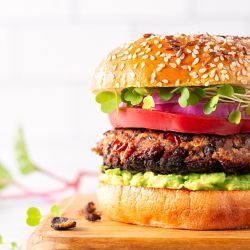
Plant-based patties made with vegetables and grains can be a satisfying meal choice that provides fiber and protein.
Savory cutlets
Vegetable or chickpea cutlets are filling and suitable as an evening snack.
Makes: 4–5 cutlets
Mixed vegetable cutlets
- 1 small potato (80 g or 2.8 oz)
- ½ small carrot (30 g or 1 oz)
- ¼ cup sweetcorn kernels (30 g or 0.5 oz)
- ¼ cup green peas (30 g or 1.0 oz)
- Spices: salt to taste, ¼ teaspoon cumin powder, ¼ teaspoon turmeric powder
- Fresh coriander leaves
- 30 g (about 4 tablespoons, or 1 oz) breadcrumbs
- 15–20 mL (1–1.5 tablespoons or 0.5 oz) oil for frying
Instructions: Boil all vegetables and mash them together. Add spices and coriander leaves. Shape into small, flat patties. Coat with breadcrumbs and pan fry until golden brown.
Chickpea cutlets
- 100 g (3.5 oz) boiled chickpeas
- Spices: salt, cumin powder, turmeric powder
- 15 mL (1 tablespoon or 0.5 oz) oil
- 15–20 g (1.5–2 tablespoons or 0.5–0.7 oz) all purpose flour
Instructions: Mix all ingredients thoroughly. Use the flour to help bind the mixture. Shape into patties and pan fry until golden brown.
Pro tip: Flattened rice flakes can be added for better binding and texture. Serve cutlets with homemade, mild coriander‑mint chutney or yogurt dip instead of store‑bought sauces.
Nourishing your child through treatment
Good nutrition is essential for children during cancer treatment. Offering small, frequent meals and snacks instead of large meals can make eating feel more manageable for both the child and the family.
Choose options that feel manageable on any given day. Sometimes, a few sips or bites are enough to support your child’s nutrition. Always follow guidance from your child’s health care team.